
Our favourite Valentine’s Day campaigns in 2026
Valentine’s Day offers a great opportunity for brands to connect with their audience through creative and engaging marketing campaigns. This year we’re showcasing our love for Valentine’s Day marketing campaigns over the years. Knowing exactly how to market your brand leading up to Valentine’s can be challenging.
That’s why today, we’re sharing our top 10 favourite Valentine’s Day marketing campaigns, why we love them, and offering our key takeaways to hopefully provide you with some inspiration for your upcoming marketing campaigns.
LEGO – “Botanical Love” Campaign (2025)

LEGO leaned into the growing popularity of its Botanical Collection with its “Botanical Love” campaign, positioning LEGO flower bouquets as a creative, long-lasting alternative to traditional Valentine’s gifts. By partnering with lifestyle and home decor influencers, LEGO showcased its bouquets as mindful, meaningful expressions of love, perfect for couples, friends or self-gifting.
Why it worked:
- Capitalised on an already trending adult LEGO product
- Leveraged influencer marketing to reach lifestyle-focused audiences
- Highlighted sustainability with flowers that last forever
Domino’s – Eau de Passion Pizza Perfume (2025)
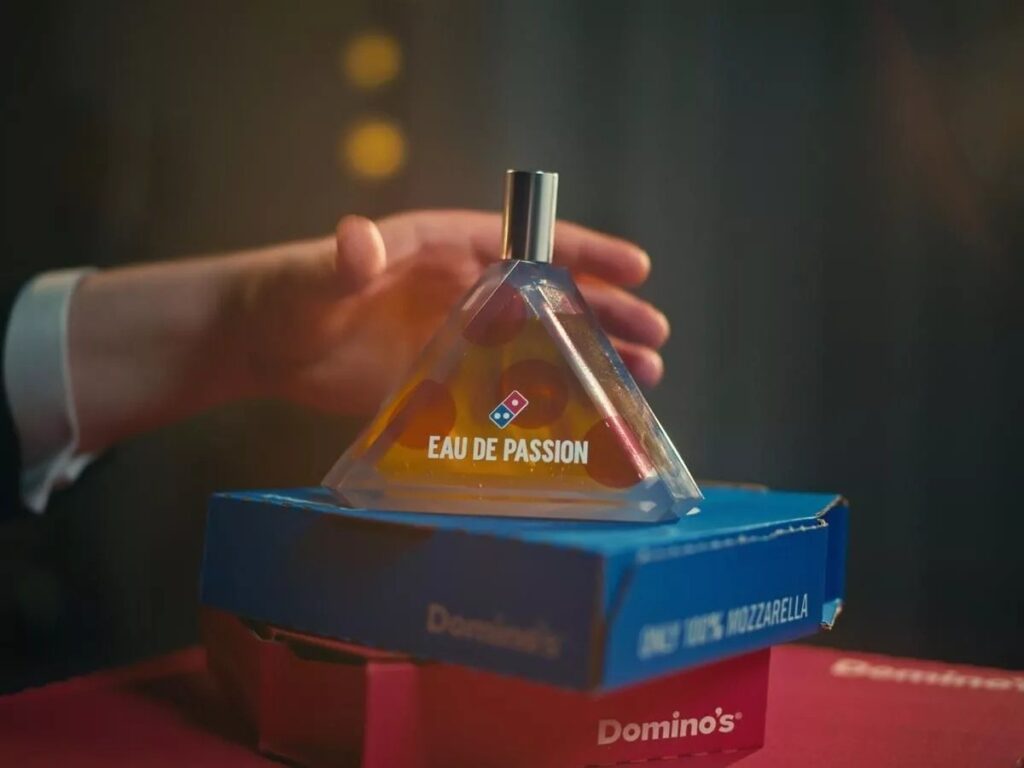
Domino’s took Valentine’s Day marketing to bold new heights with the launch of Eau de Passion, a limited-edition perfume inspired by its Pepperoni Passion pizza. Complete with a dramatic, tongue-in-cheek ad starring MAFS UK’s Luke Debono, the campaign blurred the line between parody and product innovation, sparking conversation across social media.
Why it worked:
- Unexpected product launch that leaned into humour and shock value
- Strong cultural relevance through reality TV star casting
- Perfectly on-brand absurdity that encouraged social sharing
Knorr x Tinder – #UnlockYourGreenFlag (2025)
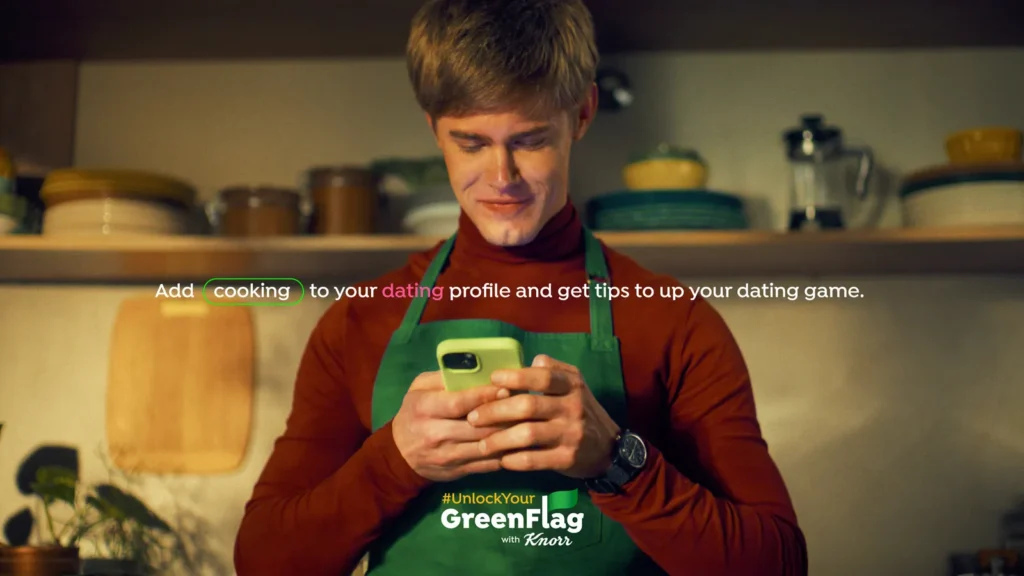
Knorr partnered with Tinder to uncover a modern dating truth: cooking is the ultimate green flag. Backed by research showing that 93% of Gen Z singles find cooking attractive, the campaign encouraged users to add cooking to their Tinder interests, helping singles bond over food and shared values.
Why it worked:
- Insight-led collaboration rooted in real dating behaviour
- Seamless brand alignment between food, connection and attraction
- Encouraged practical action within the Tinder app
Jellycat – Valentine’s Tease & Collectibles (2025)
Jellycat continued to prove that Valentine’s Day isn’t just for couples. Through subtle teasers released months in advance, the brand built excitement around its Valentine’s collection, appealing to loyal adult fans who see Jellycat as a source of comfort, nostalgia and emotional connection.
Why it worked:
- Strong emotional branding rooted in comfort and companionship
- Long teaser phase that built anticipation organically
- Inclusive messaging beyond romantic relationships
Lush – Handmade Valentine’s Collection (2026)

Lush’s 2026 Valentine’s Day campaign celebrated handmade gifting and self-care in a world dominated by automation and mass production. Alongside a limited-edition range of playful scents, Lush encouraged customers to hand-make gifts in-store, hide secret messages in bath bombs, and create reusable knot wraps.
Why it worked:
- Reinforced Lush’s ethical, handmade brand values
- Encouraged meaningful, experience-led gifting
- Positioned self-love as central to Valentine’s Day
IKEA x Breeze – Sleep Compatibility Dating (2026)

IKEA partnered with dating app Breeze to host in-store Valentine’s dates based on sleep compatibility. Selected couples enjoyed a meatball dinner inside IKEA stores, matched on preferences like mattress firmness and duvet thickness, highlighting the importance of good sleep in healthy relationships.
Why it worked:
- Clever use of product insight as a dating mechanic
- Brought online dating into a real-world brand experience
- Addressed a genuine relationship pain point with humour
Google’s Parisian Love advert (2009)
Why did we love this?
Simple and effective, Google’s 2009 Parisian Love advert follows the journey of a love story, capturing a couple’s first encounter in Paris to the arrival of their child – all illustrated through the simple functionality of the Google search bar. This advert can be used as a great source of inspiration for building a compelling narrative for your service or product, specific to a day like Valentine’s.
Airbnb’s spend a night at Juliet’s House competition (2020)

Why did we love this?
Airbnb’s spend a night at Juliet’s House competition provided an opportunity for fans of Shakespeare’s Romeo and Juliet to stay a night at Juliet’s iconic Verona house. To enter applicants were required to pen a letter to ‘Juliet’, sharing their own love story and explaining why they want to spend the night in the historic house. Not only was this competition immaculately on theme for the lead up to Valentine’s, but it was also effective at driving Airbnb engagement and creating a sense of community.
James Allen’s Instagram rom-com meme (2023)

Why did we love this?
James Allen successfully engaged their audience by incorporating well-known romantic comedy scenes into a series of memes, cleverly showcasing their jewellery within these iconic moments. This was a clever and amusing approach to content that resonates with a wide audience, as it taps into relatable content whilst also highlighting the diverse range of products available for purchase on Valentine’s Day.
Toblerone’s Love Insurance Valentine’s Day marketing campaign (2023)

Why did we love this?
Toblerone brought a playful twist to their 2023 Valentine’s Day campaign, acknowledging the uncertainties often associated with new relationships. The brand encouraged its audience to opt for the special edition Valentine’s Day chocolate bar, complete with its own insurance. If the relationship were to end, the couple could register their purchase on Instagram, receiving a redeemable online voucher. In this case, neither the Toblerone nor the relationship is a regret.
This inventive and playful approach to a Valentine’s Day campaign resonates with their audience, urging individuals to embrace new relationships regardless of their outcome, encapsulating the sentiment that “No matter how your relationship goes, love is worth it.”
Pandora’s Real Couples Explain What Valentine’s Day Means to Them (2021)
Why did we love this?
In Pandora’s 2021 Valentine’s Day advertisement, real-life couples and friends took centre stage, sharing their own little acts of love. Rather than overtly showcasing their jewellery, Pandora skillfully integrated these stories as the focal point, subtly capturing glimpses of their pieces through clever camera angles. The advert was crafted not to loudly promote their jewellery, but rather to tell the heartfelt stories of the people who wear it.
The main objective of the advert was to remind viewers that Pandora will always be here to help you tell your loved one how you feel, with their jewellery collections.
Davines Valentine’s Day Beauty Bundles promotional campaign (2023)

Why did we love this?
Last year, Davines created specific bundles of products from their love product range to promote on the lead up to Valentine’s Day. The “Love Bundle” serves as an impactful method to generate Valentine’s Day-centric content while simultaneously highlighting a key brand product.
The focus of Davines’ Valentine’s Day marketing campaign revolves around encouraging customers to indulge in products for themselves and their loved ones, emphasising the importance of self-love. This campaign effectively captures Davines’ audience, as it channels the essence of Valentine’s Day into a creative product campaign, effectively boosting sales and expanding brand awareness.
1800 Flowers Galentine’s Day campaign (2022)
Why did we love this?
In 2022, 1800 Flowers took a unique approach to their Valentine’s Day campaign by shifting the spotlight to Galentine’s Day, celebrated on February 13th. The advertisement is an ode to friendship, serving as an important reminder of the significance of platonic love during the Valentine’s season. Effectively encouraging viewers to celebrate their friendships, the advert suggests the thoughtful gesture of sending flowers to your friends on Galentine’s Day.
Deliveroo’s Third Wheel Kevin Valentine’s Day marketing campaign (2017)
Why did we love this?
Deliveroo’s 2017 Third Wheel Kevin campaign offered a humorous and innovative spin on Valentine’s Day marketing. This approach not only entertained but also effectively showcased their attractive deal running throughout Valentine’s week, ultimately boosting sales through its engaging content.
Stella Artois Valentine’s Day Where it all Began campaign (2020)
Why did we love this?
In 2020, Stella Artois marked Valentine’s Day with a brief 15-second animated video narrating the journey of a couple and highlighting how the brand’s beer played a role in their story since the beginning. The advertisement is authentic and heartfelt, providing a charming method to showcase the brand’s beer through a genuine narrative.
The narrative not only resonates with viewers on an emotional level but also cleverly integrates the brand’s product into significant moments, showcasing how a well-crafted story can enhance the promotion of a product, making it more memorable and relatable for the audience.
WWF’s Love it or Lose it Valentine’s Day marketing campaign (2021)
Why did we love this?
The WWF’s Valentine’s Day campaign, titled “Love it or Lose it,” went beyond conventional notions of romance and love. Instead, it emphasised the crucial importance of loving nature so that it doesn’t disappear. This campaign is a shining illustration of WWF’s dedication to raising awareness and showcases how brands can focus their Valentine’s Day campaign to reinforce their key morals and values.
Valentine’s Day marketing campaigns key takeaways
- Be creative: In order for your campaign to stand out in a sea of other Valentine’s Day campaigns you’re going to have to get creative – whether through entertaining content or providing valuable information, finding a unique angle is essential.
- Be relatable: Make sure the Valentine’s Day campaign you build is relatable. Regardless of what story you try to sell, it has to resonate with your target audience. Think about the experiences and emotions that will connect with your audience on a personal level. By doing so, you not only capture attention but also create a lasting impact as your audience sees themselves reflected in your campaign.
- Tell a story: Your brand doesn’t necessarily have to be the main focus of your campaign – consider telling a compelling story in your campaign and making your brand the subplot. Pandora, Google, and Stella Artois are good examples of this. Build a story that resonates with your target audience, tapping into emotions and creating a deeper connection. This approach not only makes your campaign stand out but also enhances brand recall and loyalty.
- Take a different approach: Use Valentine’s Day to tell your brand’s story. Valentine’s Day can serve as a compelling backdrop to communicate your values and morals to your audience. Utilise the essence of Valentine’s Day to align your campaign with your brand’s core messages and values. WWF and Davines are good examples of brands who achieved this with their campaigns.
At FDRY, we support our clients to build impactful marketing strategies from strategy and planning to implementation. As a leading digital marketing agency, our approach is creative and grounded in data-informed insights. Our team of marketing experts would be happy to have a discovery session with you to discuss your digital marketing needs, or alternatively send us a brief or get in touch at [email protected]om